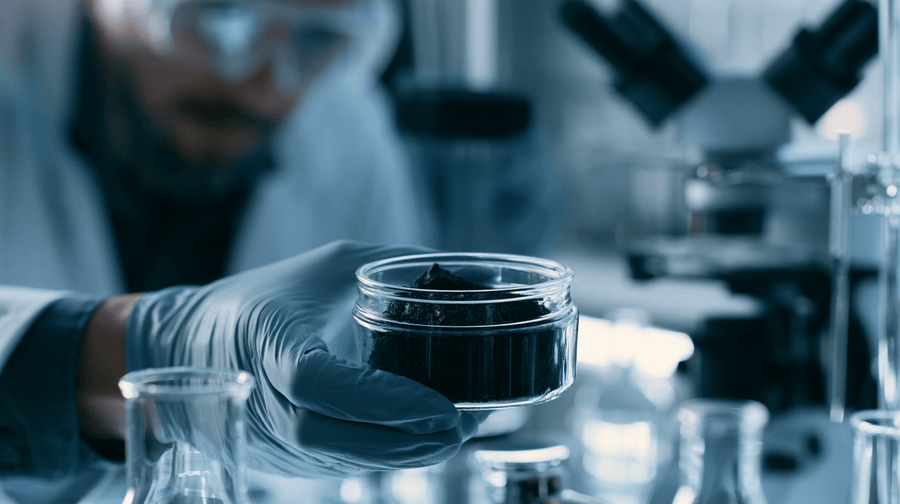
Raw shilajit is not something you can put straight into a jar. It comes out of the mountain mixed with rock dust, plant debris and whatever else was on the surface. Turning it into a clean resin takes several steps, and the choices made along the way decide the quality of the final product.
Step 1: collection
Collectors travel to high-altitude rock faces and gather the resin by hand during the warmer months, when it softens and seeps out. Small amounts are taken from many sites, not large amounts from one.

Step 2: dissolving and filtering
The raw material is dissolved in clean water so the soluble, beneficial fraction separates from stone and debris. The solution is then filtered, often several times through fine cloth, until the insoluble material is removed.

Step 3: concentrating the resin
This is where producers differ most. Many speed things up by boiling or heating the solution over a fire or in industrial vessels to evaporate the water quickly. Traditional heating is fast, but high heat can damage heat-sensitive compounds such as fulvic acid.
The alternative is slow evaporation in the sun and mountain air with no direct high heat. It takes longer, which is why it is less common. Sun-drying is the method Montavita uses, because gentler drying is better at preserving the fulvic acid that people buy shilajit for in the first place.

Why heat matters
Fulvic acid and other organic compounds are sensitive to prolonged high temperatures. A product that has been boiled hard may still look like perfect black resin while containing less of what you expected. You cannot judge this by eye. Two jars can look identical and differ meaningfully in composition.
Step 4: testing
Purification does not guarantee safety. Heavy metals such as lead, arsenic, cadmium and mercury can be present in raw material, and a filter does not reliably remove them. Every Montavita batch is therefore verified by an EU-accredited laboratory in Belgium before it ships, and the results are published on our lab testing page.

How to judge a brand
- Does it say how the resin is dried, or only that it is "pure"?
- Are batch-level lab results published, with heavy-metal figures, not just a generic certificate?
- Is the laboratory named and independent?
If you want to test what you already own, see real vs fake shilajit: tests and how to read a lab report.